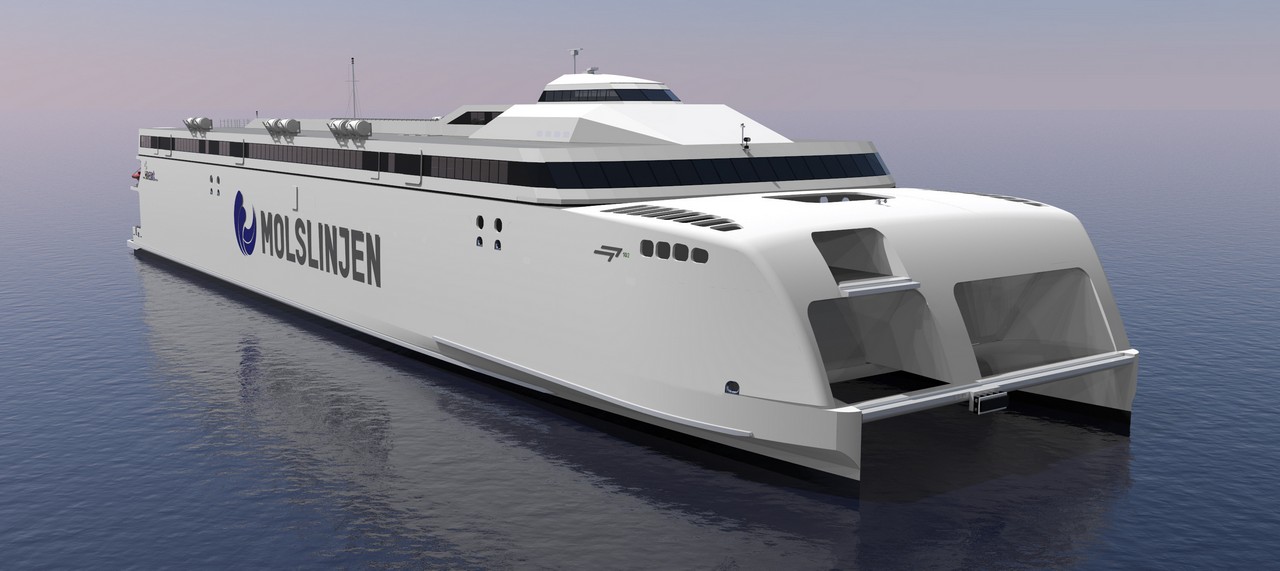
Battery manufacturer AYK Energy, based in Andorra, has been selected to supply the batteries for Molslinjen’s three electric high-speed ferries, which are being built by Incat. Each ferry will be equipped with a 55 MWh battery pack, of which 46.5 MWh is usable capacity. The batteries will be charged in 30 minutes.
“We are pushing the boundaries of technology here, and the combined weight of the vessel and its batteries will be crucial to operating such large vessels at high speed across the Kattegat. So when AYK managed to significantly reduce the weight of its batteries without compromising power, that tipped the balance. This provides a proven level of safety that is on a par with, or probably even better than, what we have with diesel today. This was also a decisive factor in our choice of supplier.”
Carsten Jensen, CEO of Molslinjen.
When Molslinjen first went to market for batteries almost two years ago, AYK Energy’s battery package weighed more than 700 tonnes. Since then, the company has completely rethought its battery design, reducing the weight to approximately 406 tonnes.
“We decided to rethink the battery’s design from the ground up to reduce weight and improve performance,” he said. “With new battery cells, inspiration from manufacturing techniques in the automotive industry and a lighter, stronger aluminum structure, we can store more energy per kilogram and deliver more power. At the same time, we have adapted the technology to the specific requirements of the marine environment and integrated our patented solutions for fire suppression and limiting overheating within the battery modules.”
Chris Kruger, President of AYK Energy.
AYK uses LFP batteries, which are known for their long service life and stable chemical and thermal properties. This provides a high level of resistance to overheating and generally results in a less severe reaction in the event of an internal short circuit compared with NMC/NCA batteries.
“The speed how AYK is bringing latest LFP technologies into the marine industry is impressive. For large ferries we have to find a balance between short high power charging and long high energy sailing times combined with a weight challenge on aluminum catamarans like these.”
Dr. Torsten Büssow, Director of Wartsila’s electrical integrator.
The first of the three high-speed ferries is expected to arrive in Denmark towards the end of 2027, with operations scheduled to commence in the first quarter of 2028. The other two ferries are expected to arrive in Denmark in 2028 and 2029, respectively.
Sources: Molslinjen and AYK Energy
