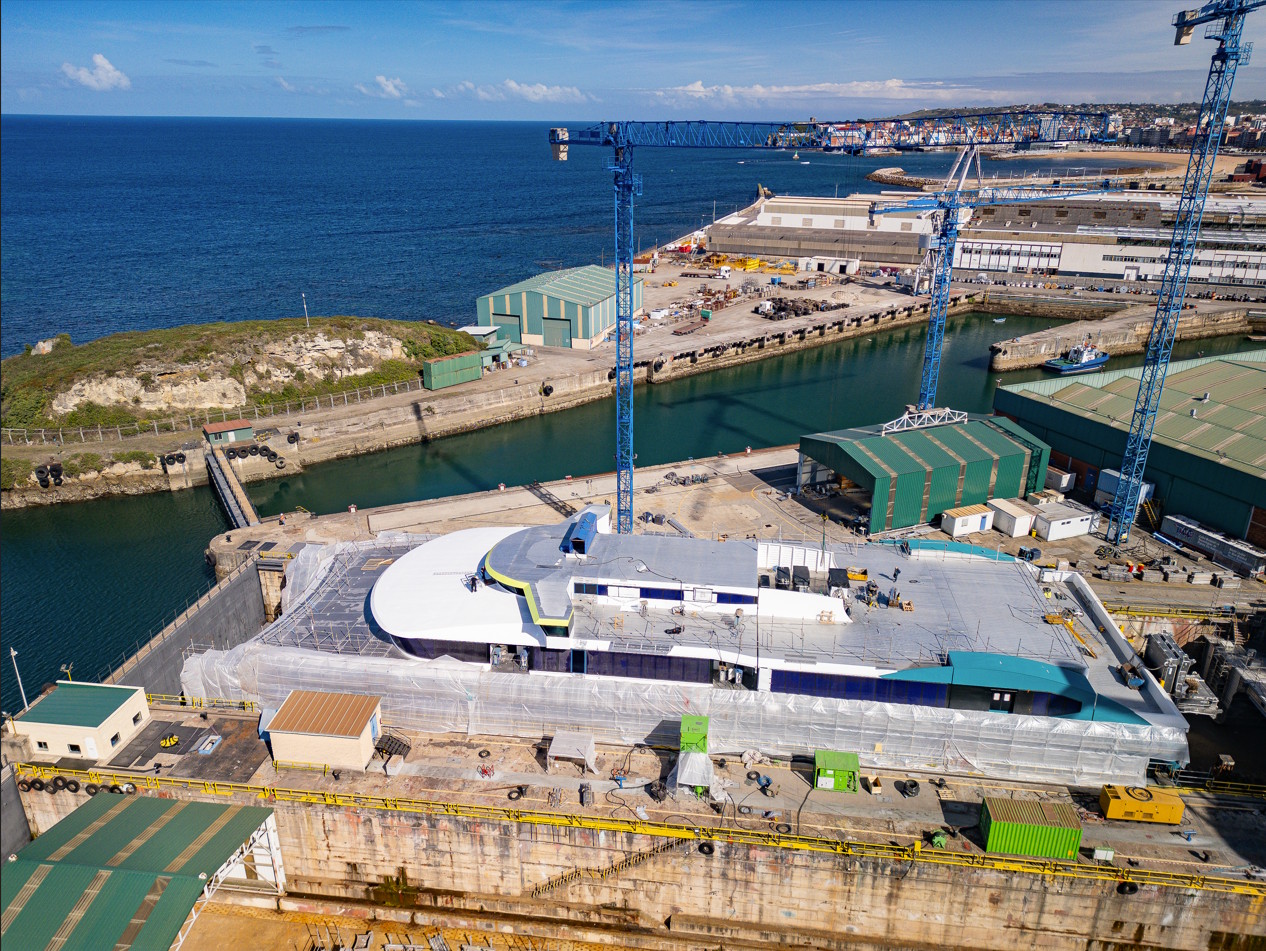
Spanish ferry operator Baleària will float out its first fully electric fast ferry on 23 October, marking a key step in its plans to establish an emissions-free maritime corridor between Tarifa, Spain, and Tangier, Morocco.
The 87-metre catamaran is currently under construction at Astilleros Armón in Gijón and is scheduled to enter service in summer 2027. A second, identical vessel is expected to begin operating by the end of next year.
Baleària president Adolfo Utor described the project as a milestone in the company’s decarbonisation strategy, saying the two vessels represent a major technological project aimed at accelerating the energy transition in European maritime transport.
Construction of the first vessel is progressing, with the aluminium structure nearing completion. Remaining work includes hull painting, electrical and pipe installations, battery and control-system integration, interior outfitting and commissioning, followed by dockside and sea trials.
The float-out presents a particular engineering challenge because both catamarans are being built simultaneously in a dry dock capable of accommodating only one and a half vessels. Once the first ferry has been floated and removed, the dock will be drained again to allow construction of its sister ship to continue.
The €200 million-plus project includes not only the two electric ferries but also the electrification of the ports at Tarifa and Tangier City. Equipped with batteries and shore-power (OPS) systems, the vessels will be capable of completing the 18-nautical-mile crossing entirely on electric propulsion, producing no direct emissions, noise or vibration during the voyage.
At each port, automated robotic charging arms will supply up to 16 MW of electricity, allowing the ferries to recharge in around 40 minutes. Baleària says the project will create the first zero-emission intercontinental green shipping corridor between Europe and Africa.
Source: Baleària
